The Mechanics of Banquet Kitchen Timing: How Hotels Plate for 500 Guests Simultaneously
The Invisible Choreography Behind 500 Simultaneous Steaks
From the ballroom, a large gala dinner can look almost effortless. Hundreds of guests finish a speech, the doors open, and within minutes polished plates arrive at each table with remarkable consistency. A hotel may appear to have simply produced 500 hot meals at once, yet the reality is closer to a carefully engineered performance in which cooking, holding, plating, dispatch, and service are all synchronized to the minute.
Traditional à la carte cooking is not designed for this scale. In a restaurant line, tickets arrive continuously and cooks adjust individual portions as orders come in. A conference or gala reverses that model: the kitchen must produce a large number of meals to a shared service window, often while accommodating vegetarian, vegan, allergy-sensitive, and other dietary requirements. The result depends on thermal logistics, equipment programming, portion discipline, and a clear chain of communication. For event planners seeking stress-free execution, understanding this choreography makes it easier to build a realistic run of show and protect the guest experience.
Mastering the Thermal Curve with Regeneration and Combi Technology
The central challenge is not simply keeping food hot. It is keeping food hot without allowing the texture, color, moisture, and level of doneness to deteriorate. Conventional hot holding can make meats dry, vegetables dull, and sauces separate when dishes sit for too long. Modern banquet kitchens increasingly separate production from final service. Proteins, starches, and vegetables can be prepared in advance, rapidly chilled under controlled conditions, and brought back to service temperature shortly before plating.
Combi steamers are particularly valuable because they combine controlled heat with humidity. A large professional unit such as the Retigo B 2021 is designed for demanding production volumes and can accommodate GN containers on a mobile cart. Its functions include hot-air cooking, steaming, combination cooking, regeneration, low-temperature cooking, and programmable multi-step cycles. Features such as humidity control, core-temperature probes, automatic preheating, HACCP records, and scheduled programs allow chefs to repeat a process rather than rely on guesswork.
The regeneration stage is calibrated to the food, the container, the plate, and the time available before dispatch. Controlled moisture prevents the surface of a cooked protein from losing too much water, while the oven”s climate management helps avoid the pooling or sogginess that can occur when steam is used without precision. RATIONAL describes this approach as finishing, using dew-point regulation to create a protective layer of microscopic water droplets around the food. The objective is a short, carefully timed final treatment rather than prolonged warming.
| Thermal stage | Operational purpose | Planning consideration |
|---|---|---|
| Advance preparation | Cook components consistently before the event service window | Recipes must tolerate chilling and later finishing |
| Rapid chilling | Move food safely into controlled storage while protecting quality | Containers, batch sizes, labeling, and cooling procedures must be defined |
| Regeneration | Restore serving temperature with controlled heat and humidity | Different foods may require separate programs and timings |
| Plating | Assemble portions while preserving appearance and heat | Warm plates, disciplined station flow, and minimal idle time are essential |
| Final holding | Protect plated meals during the short movement to the ballroom | Covered carts and service-door staging reduce temperature loss |
Heated cabinets still have a role, particularly for short holding, organized staging, and transport. Commercial models commonly use insulated doors, adjustable racks, digital thermostats, and humidity control. Their purpose is to maintain food at service temperature, not to rescue a poorly timed production plan. The strongest banquet operations therefore treat holding equipment as a buffer measured in minutes, while the combi oven and the service schedule carry the responsibility for final quality.
The Plating Assembly Line in Four High-Speed Stations
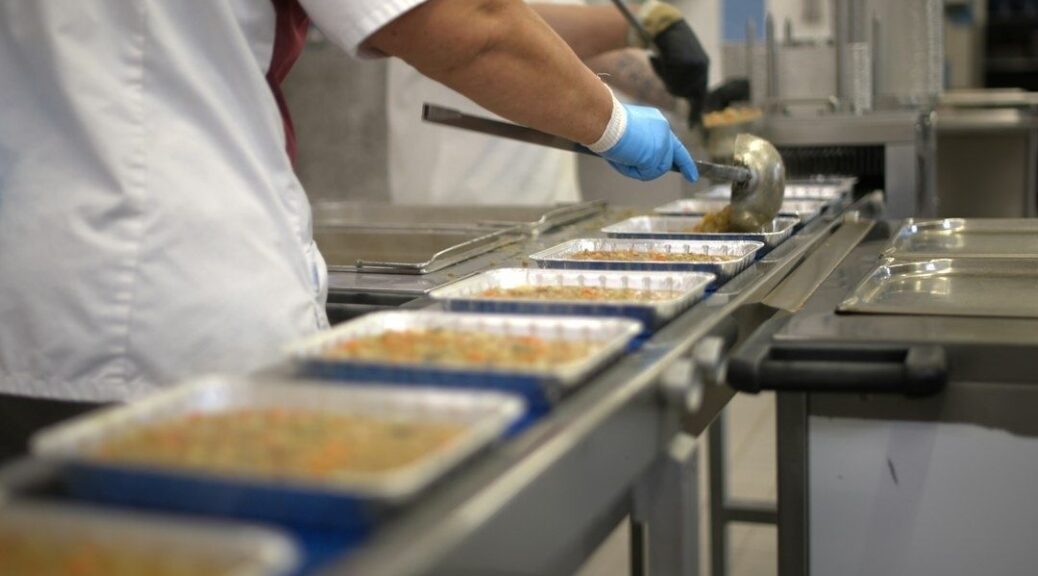
Once the food has been regenerated, the kitchen changes character. It is no longer primarily a cooking area; it becomes an assembly line. Plates are warmed in advance, often through heated plate racks or warming systems, so that the china does not immediately draw heat from the food. In some operations, thermal covers protect plated meals from drafts and evaporation during the short interval between the line and the banquet cart.
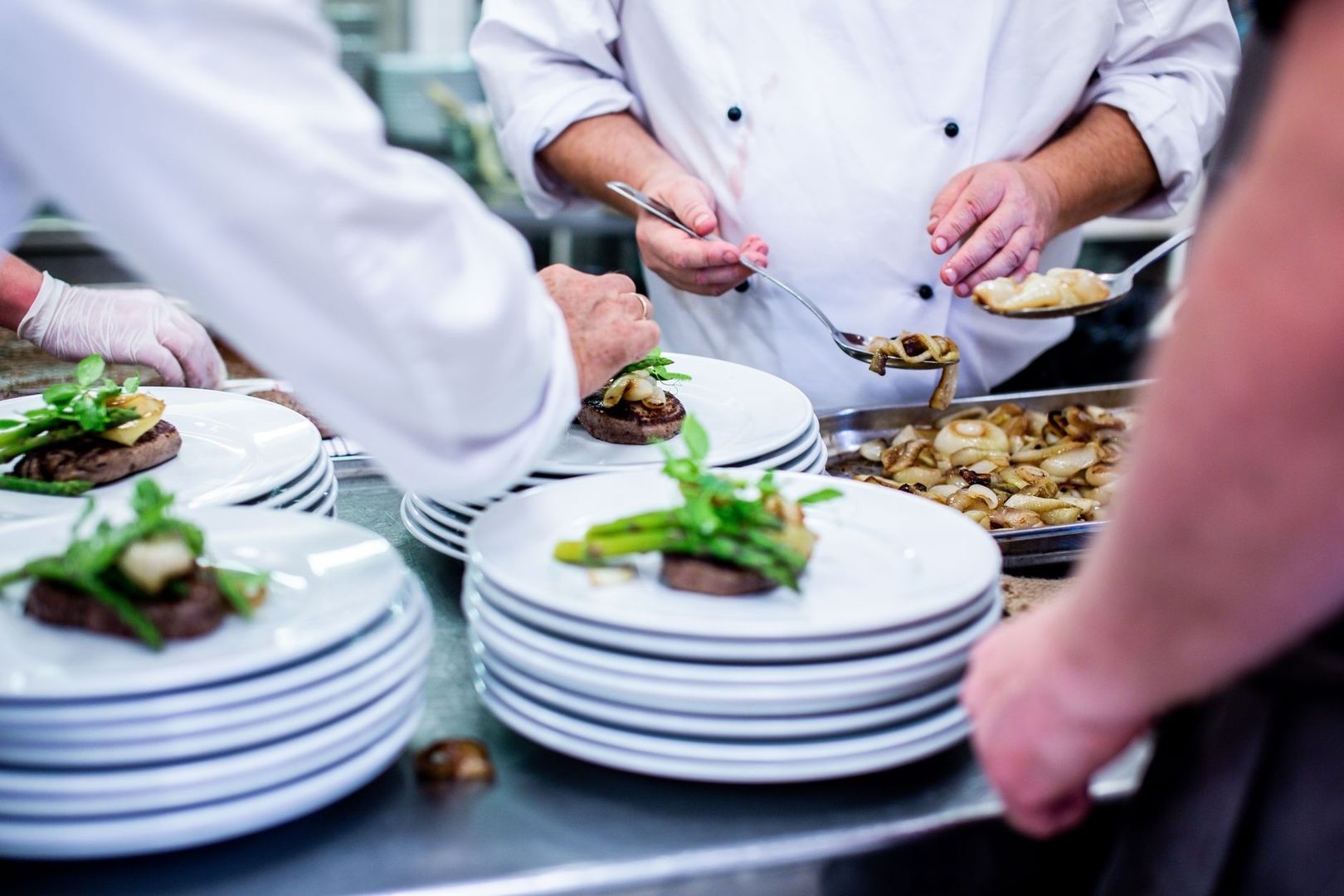
A well-designed line assigns one clear task to each station. The exact arrangement varies with the menu, but a four-station model illustrates the mechanics:
- Starch foundation. The first cook places the measured portion of potato, rice, grain, pasta, or another starch in the designated position. A consistent foundation establishes both visual balance and a reliable portion size.
- Vegetable bed. The next station adds vegetables or a composed accompaniment. Placement matters because the vegetable should support the protein visually while remaining clear of the plate rim.
- Seared protein. The protein is added at the point when its temperature and texture are most suitable for service. Slicing, orientation, and portion weight are controlled so that every guest receives the intended presentation.
- Final saucing and garnish. The last station applies sauce, finishing oil, herbs, or another garnish. This station must work quickly because sauce placement affects appearance and can soften crisp elements if applied too early.
At the end of the line, the expediting chef acts as the quality and timing gatekeeper. This person checks that portions meet the event specification, rims are clean, garnishes are present, and dietary modifications are correctly identified. Plates that fail the visual or portion standard are removed rather than passed forward. The expeditor also controls the release pace, preventing the kitchen from producing more plates than the carts or service brigade can handle.
Sanitation is part of the production design, not an afterthought. Color-coded utensils, frequent handwashing, separated allergen procedures, clean work surfaces, and disciplined traffic patterns protect guests when hundreds of portions pass through the same area. Following standard hotel health protocols and municipal regulations, including guidance reflected in Recent Food Establishment Closures, the kitchen maintains strict sanitation controls during high-volume handling. Clear labeling is especially important when standard, vegetarian, vegan, gluten-free, and allergy-sensitive plates move through the same service window.
Safeguarding Temperature and Quality in the Final Transit
Plating is only half the challenge. A finished meal still has to travel from the kitchen to the correct ballroom table without losing heat or presentation quality. Radiant banquet cabinets are built for this narrow but important window. The FWE A-144, for example, is designed to hold and transport up to 144 covered plates, with space for plates up to 11 inches in diameter. Its radiant heating system is intended to provide gentle, even support rather than aggressive reheating that could dry the food.
Capacity planning matters. A 500-guest dinner may require several carts, each assigned to a zone or group of tables. Plates are loaded in a sequence that matches the room layout, allowing servers to remove them without searching or crossing paths. Covered cabinets, insulated doors, durable shelves, and carefully managed staging help preserve the work completed on the plating line.
Food safety remains the controlling standard, even when the service is visually polished. The FDA”s Serving Up Safe Buffets guidance identifies 140°F as the minimum for hot-held food and 40°F or colder for cold-held food. It also advises limiting the time perishable food spends at room temperature and using thermometers rather than relying on appearance. Local requirements may differ or impose additional controls, so hotel kitchens follow the rules applicable to their jurisdiction and operation.
- Stage carts close to the ballroom doors. Shorter travel distances reduce exposure to cooler corridors, elevator delays, and guest traffic.
- Keep covers closed. Opening a cart repeatedly allows heat and moisture to escape and disrupts the loading sequence.
- Use a documented cart assignment. Each cart should correspond to a defined room zone, table range, or service captain.
- Check representative temperatures. Maintaining core temperatures above safe minimums reflects standard commercial hospitality guidance, mirroring regulatory standards on serving safe buffets and hot-held entrées.
- Coordinate dietary plates separately. Special meals should be labeled and handed directly to the responsible server or captain rather than mixed into an unmarked stack.
The most efficient kitchens position carts immediately outside the service doors once loading is complete. This creates a controlled handoff between back of house and front of house. It also prevents the common mistake of sending a cart into the ballroom too early, where it may sit in a warm or cool area while speeches continue. The timing should be governed by the service call, not by the moment the first cart becomes available.
The Banquet Captain Runway and Service Brigade Precision
The banquet captain provides the operational bridge between the kitchen, the floor, and the event program. A five-minute warning typically confirms that the room is ready, guests are seated, the speaker or entertainment segment is ending, and servers are in position. The captain then releases a clear call signal, allowing the brigade to move together rather than sending isolated servers into the room.
For a table of eight or ten guests, synchronized table drops create the impression that every meal arrived simultaneously. Servers approach from assigned directions, place plates in a practiced order, and withdraw without blocking one another. This is why room mapping, table numbering, aisle width, and server assignments matter as much as kitchen equipment. A beautiful menu can still feel disorganized if the floor team cannot move comfortably.
- Assign zones before the event. Each server should know the tables, cart, and dietary meals under their responsibility.
- Use concise radio language. Calls should identify readiness, release, delay, and completion without unnecessary conversation.
- Protect the service window. Speeches, awards, and audiovisual cues should not overlap the most sensitive plating period.
- Keep substitutions discreet. A captain can direct a special plate to the correct seat without announcing the dietary requirement to the table.
- Build a recovery plan. Spare portions, clearly marked alternatives, and a senior contact in the kitchen help resolve last-minute changes quietly.
Experienced captains handle substitutions without breaking the rhythm. A guest may disclose an allergy at check-in, a speaker may need a different meal, or a seat may change at the last minute. The solution is not to stop the entire line. Instead, the front-of-house team updates the seating and dietary list, confirms the marked plate, and routes it through a designated handoff. Calm communication preserves both dignity and timing.
How Planners Can Build Flawless Run of Shows for Better Dinners
Event planners have significant influence over culinary execution before the first ingredient is prepared. The most important consideration is the relationship between the program and the meal. Extending introductory speeches well beyond the planned service window can force the kitchen either to hold finished food too long or to delay regeneration and plating. Both choices can weaken quality. A run of show should therefore include a firm meal cue, a realistic speech limit, and a contingency process for delays.
During planning meetings with banquet sales and the executive chef, ask for the details that determine whether the service will feel effortless:
- Confirm the guaranteed guest count and the deadline for final dietary information.
- Request a realistic plating and service window, including the time required to move carts into position.
- Discuss the menu components that are most sensitive to holding, such as crisp coatings, rare proteins, delicate sauces, or fried garnishes.
- Clarify how vegetarian, vegan, allergy-sensitive, and other modified meals will be labeled and delivered.
- Ask where carts will stage, how many servers will cover each zone, and who has authority to release service.
- Build a delay protocol covering late speakers, room changes, technical problems, and guest movement.
When these questions are answered early, dinner becomes more than a logistical hurdle. It becomes a dependable centerpiece of the conference or gala, with food arriving at the right temperature, in the right sequence, and with the quiet confidence guests associate with excellent hospitality. For planners, that level of polish comes from respecting the kitchen”s thermal curve, protecting the service window, and giving every department a shared definition of readiness.